

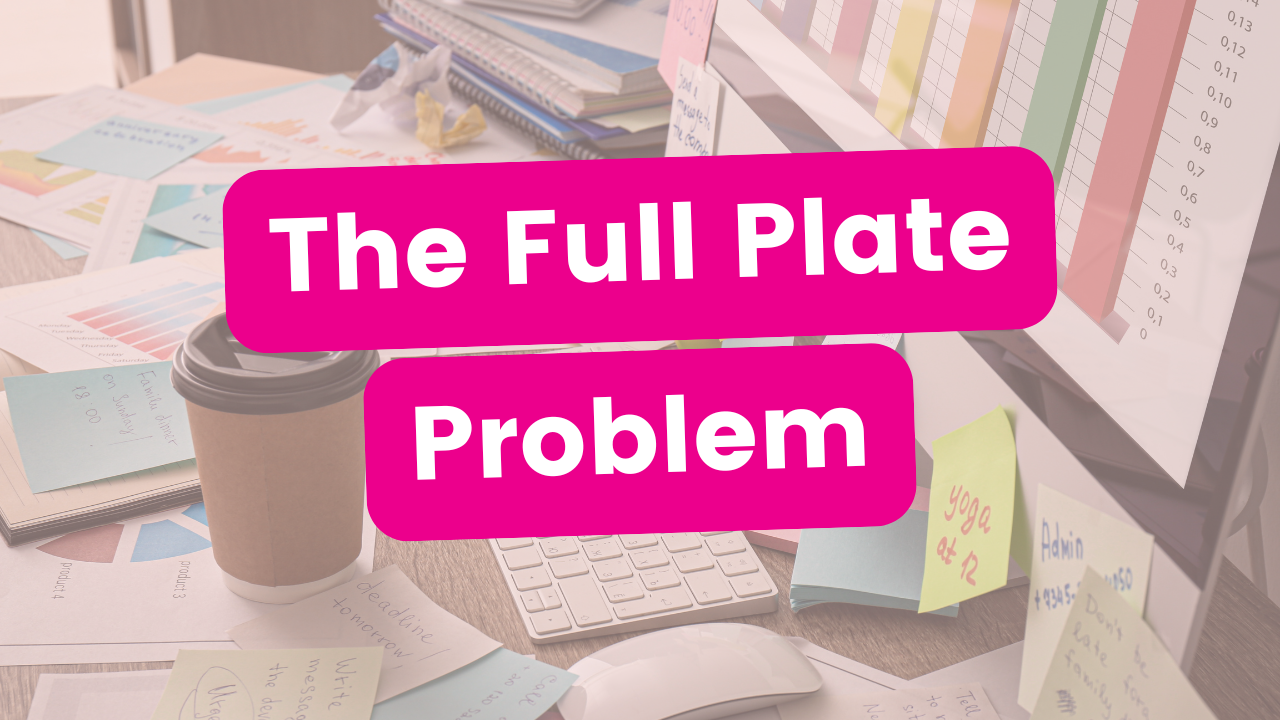
Let’s talk about transitions. Not the big, sweeping life changes (although we’ve all had our share of those), but the tiny ones that happen all day, every day—the five minutes between a work meeting and school pickup, the 20 minutes between getting the kids to bed and trying to unwind, the awkward in-between moments when you shift from one part of your day to another.
Most of us move through these transition points without thinking… or worse, by defaulting to our phones or cramming in “just one more thing.” But the truth is, how we handle transitions has a huge impact on how we feel throughout the day. And if we don’t manage them well, it can leave us feeling like we’re always rushing, never resting, and constantly scattered.
This week, I’m sharing why transitions matter more than you think and a few simple ideas for how to be more intentional with them.
Stop defaulting to distractions.
When you have five free minutes, what do you do? If your answer is “check my phone” or “scroll Instagram,” you’re not alone, but you’re also not using that moment as a true transition. These micro-moments can be opportunities to reset, breathe, or simply do nothing (yes, that’s allowed). Start noticing your patterns and ask yourself: “Is this helping me reset, or is it adding more noise?”
Add a “bridge” between activities.
If you’ve ever felt like you were jolted into the next part of your day without any warning, you probably needed a better bridge. Transitions don’t have to be long, but they do need to be intentional. Try a 60-second pause, a quick walk around the house, or even just standing up and stretching. These little rituals help your brain shift gears so you’re not carrying the stress of one activity into the next.
Protect white space in your weekly plan.
If your schedule is packed from morning to night with no breathing room, transitions will always feel like a luxury you don’t have time for. That’s why I’m so passionate about weekly planning. When you create a realistic plan that includes margin, you actually get to enjoy those moments between the moments—and show up more present for what’s next.
Anchor your day with intentional routines.
Bookend your day with routines that serve as transitions in and out of your daily responsibilities. Maybe it’s a few minutes of journaling before you start work, or a walk after dinner to mentally close out the day. These small habits build structure—and give your mind a moment to catch up with your body.
Transitions are where overwhelm creeps in… or peace finds its way through. The more intentional we are with these micro-moments, the more in control and grounded we feel—even on the busiest days.
So this week, don’t just plan your tasks—plan your transitions too. Even 30 seconds can make a difference.

1. Six-Figure Destiny: Helping Single Moms to Go from Surviving to Soaring

I’m so honored to be one of the speakers at the Six-Figure Destiny Summit—a free virtual event happening April 28–May 7, 2025.
This event is all about supporting single moms who are ready to go from just surviving to truly soaring. You’ll hear from 20+ incredible women sharing practical tools, real-life strategies, and powerful mindset shifts to help you create financial stability, emotional clarity, and the confidence to move forward with purpose.
If you or someone you know could use this kind of encouragement and support, I can’t recommend it enough!

How to Build Routines That Actually Stick (4 Simple Steps)
If you’ve ever tried to start a new routine—only to drop it a few days later—you’re not doing it wrong. Most people just approach routines in a way that isn’t built to last.
In this week’s video, I’m breaking down my 4-step process for building routines that actually stick, even when life gets messy. You’ll learn how to identify the right tasks to build a routine around, what most people overlook that causes routines to fall apart, and how to structure your routine with flexibility in mind (not perfection).
Plus, I’ll show you how to make it part of your weekly plan so it becomes second nature. If you're ready for routines that feel supportive—not stressful—this one’s for you.
|

This Week’s Buzz: Can you use AI to help estimate how long tasks will take?
When you’re tackling something new—like launching a podcast, painting a room, or planning an event—it can feel impossible to know how much time to set aside. That’s where AI tools like ChatGPT can come in handy… if you know how to ask the right way.
In this week’s Weekly Buzz, I’m sharing how to use AI to get realistic time estimates, what to include in your prompt to avoid wildly inaccurate answers, and a quick example of how I’ve used it in my own weekly planning.
If estimating how long things will take always feels like a guessing game, this might be the trick you’ve been missing!
Remember, this video is only available until Wednesday—don’t miss it! Head to The Pink Bee app to watch now.

Friend, don’t forget—just 15 minutes of planning today can set the tone for your entire week. You’ve got the tools, you’ve got the tips, and now it’s time to take action. Let’s crush this week together!






Responses