

Managing money and managing time have more in common than most people realize. Recurring expenses, emergency funds, long term savings, those concepts translate almost perfectly to how we plan and protect our time. And once you start seeing the connection, the whole thing gets a lot more concrete.
Here are the four fundamentals.
1. You cannot spend more time than you have.
When you spend more money than you have, you go into debt. The same thing happens with your time. When you keep saying yes to things without checking whether you actually have the time for them, you go into debt too, and the first thing that gets cut is always you. Your rest, your downtime, your health. Learning to treat your time as a finite resource and stopping before it runs out is the foundation everything else is built on.
2. Know what is already spoken for.
Before you touch your paycheck, some of your money is already gone. Rent, utilities, car payment, groceries. Your time works exactly the same way. Every week, before anything new gets added, a significant chunk of your hours are already committed to recurring tasks at work, at home, and in your family. Most of us have never actually written that down or made it visible, which means we keep accidentally overbooking ourselves and wondering why the week fell apart. Getting clear on what is already spoken for before the week begins changes everything.
3. Build in a buffer for the unexpected.
Financial advisors tell you to have an emergency fund for the things you can't see coming. Your time needs the same thing. Most of us have some version of unpredictable hours every week, a sick kid, an unplanned meeting, something that lands on your desk out of nowhere. When you build that buffer into your weekly plan intentionally, those moments don't derail you. When you don't, every unexpected thing sends you further into debt and something important gets sacrificed to cover it.
4. Plan for what you actually want.
This is the one most of us skip entirely. We handle the have-tos and then collapse, and the want-tos never come. But just like saving for a vacation means making intentional choices about where else your money goes, creating time for the things you love means making intentional choices about where your time goes. It requires prioritization, and sometimes it means saying no to things that are taking up space that belongs to something more important to you.
Put it into practice
Start this week by writing down just the first two. What time is already spoken for before your week begins, and roughly how much buffer do you need for the unexpected? Just seeing those two numbers is often enough to explain why every week feels like too much.
You deserve a life that has want-to in it, not just have-to.

- Master Your Morning Starts TOMORROW! 🌞✨

Tomorrow is the day! Master Your Morning kicks off July 20, and I do not want you to miss it. This free 5-day live workshop is where we figure out your morning personality type and build a routine that is actually designed for you, not a routine you copied from someone whose life looks nothing like yours.
We meet live July 20 to 24 at 12 pm ET for just 30 minutes a day, and a free workbook is included the moment you register. Replays will be available but only for a limited time, so if you want to participate, now is the time to grab your spot! - Plan-a-Palooza 2026 — Join the Waitlist 🤩

Once a year, I teach my full annual planning method live, and this is it. Plan-a-Palooza is The Pink Bee's biggest event of the year, and it is the only place where we build your Year at a Glance and Annual One-Pager together, live, step by step.
This year's event runs October 22 and 23. Tickets go on sale August 1, and joining the waitlist gets you a $20 off coupon when they do. If you have been wanting to finally build a plan that holds up for the whole year, this is where that happens!

The Productive Morning Routine That Doesn't Start at 5 AM
If you have ever searched "productive morning routine" and walked away feeling like you were already failing before the day even started, that is not on you.
Most of those routines are built for one very specific kind of person, and if that is not you, no amount of trying harder was ever going to make them stick. This week, I am breaking down why and what a routine that actually works for your personality type and your real life looks like instead.
|
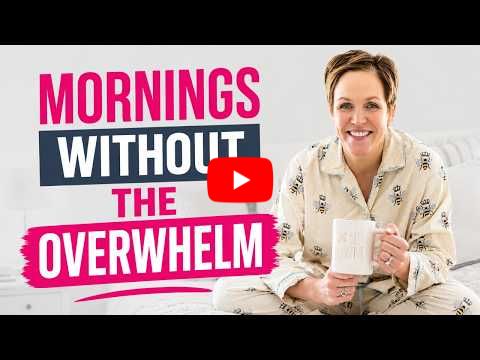

Do you stick to your plan when you're in a bad mood?
We have all been there. You had a solid plan, and then you woke up on the wrong side of the bed, and suddenly none of it sounds appealing. This week, I shared exactly how I work through that and why it is actually the same process I use whenever I feel like procrastinating.
Spoiler: your weekly plan is doing more heavy lifting in these moments than you might realize.
Remember, this video is updated every Wednesday, so don’t miss it! Head to The Pink Bee app to watch now.

Friend, don’t forget, just 15 minutes of planning today can set the tone for your entire week. You’ve got the tools, you’ve got the tips, and now it’s time to take action. Let’s crush this week together!








Responses